
“Those choreographers, MacMillan and Ashton , they knew how to translate  complicated life into choreography. Manon is not stupid, Marguerite is not stupid, A Month in the Country is not stupid — they are rich, you can go as deep as you want. The stage is like a magnifier of thoughts and emotion and vibration, that’s what the stage is incredible for, because it makes you live other lives, it makes you experience other emotions, it makes you feel more beautiful, or more alone, or more angry, it makes you feel much more, more, more.”
Choreographers
Creative choreographers, who are or were tuned to real life and their times, whose work has depth, or a new language, who can touch something beyond your eyes.
Quote of the day – Tennessee Williams
“Then what is good? The obsessive interest in human affairs, plus a certain amount of compassion and moral conviction, that first made the experience of living something that must be translated into pigment or music or bodily movement or poetry or prose or anything that’s dynamic and expressive – that’s what’s good for you if you’re at all serious in your aims.”
——————————-

One of Tennessee Williams’ most powerful plays, A Streetcar Named Desire (1947), became a movie (directed by Elia Kazan) that earned various Oscars at the time – a raw, heart-wrenching and desillusioned affair… and an absolute must-see!
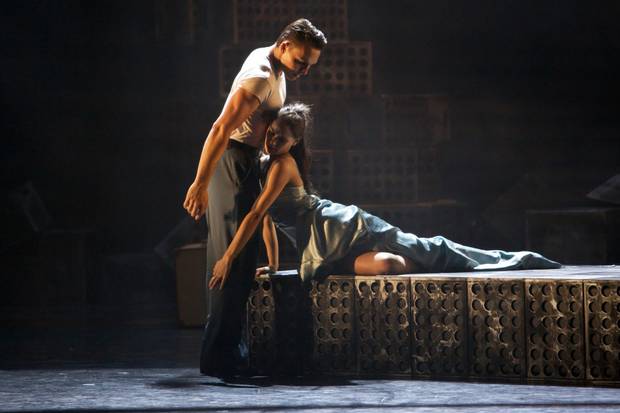
Two choreographers did a great job translating it to dance: Neumeier for Marcia Haydée and Stuttgart Ballet, in 1983, and Annabelle Lopez Ochoa, working together with movie director Nancy Meckler, for Scottish Ballet (2012).
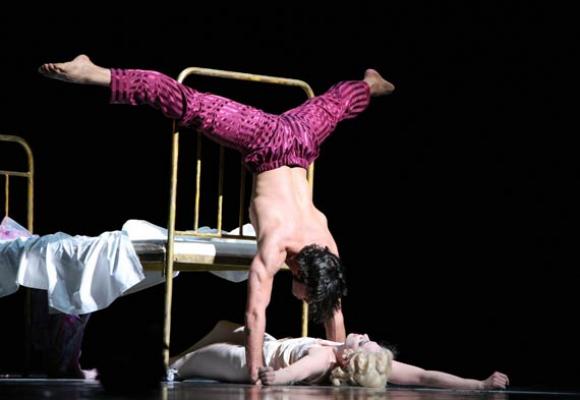
Neumeier play is in Stuttgart’s regular repertoire (scheduled next in May, 2015), and an item in my wish-list!
There was some dismissive nose-wrinkling, once more, on these kind of story-telling ballets, “a lesser kind of dance art”… If Tennessee Williams’ were to write a play equivalent to a ballet without narrative, it would be made of meaningless sequences of beautiful words… and THIS should be some kind of “higher art”? Oh, spare me!
Limitation and Innovation: the Art of Making it Work Anyway
Just found this post, I liked the ideas and comments, makes you think…
On Monday, I went to a lecture by Twyla Tharp about her book The Creative Habit. Her talk included some ideas about how to develop creativity and stories of her own experiences as, peppered with a fair share of strong opinions and unfiltered sass. But what really interested me was hearing the about her modest choreographic beginnings and the extent to which her early career was shaped by adaptation to circumstance.

Her presentation stressed the importance of structure as a framework for creative innovation. This principle, though it might sound a little contradictory to someone with a more romanticized notion of free-flowing creativity, should ring true with anyone who has ever taken an improv class and realized that the instruction “go across the floor without lifting your left elbow off the ground” results in a lot more interesting movement than “just do anything,” or even anyone who has found themself making more progress on a paper during…
View original post 428 more words
Quote of the Day – Daniel Nagrin
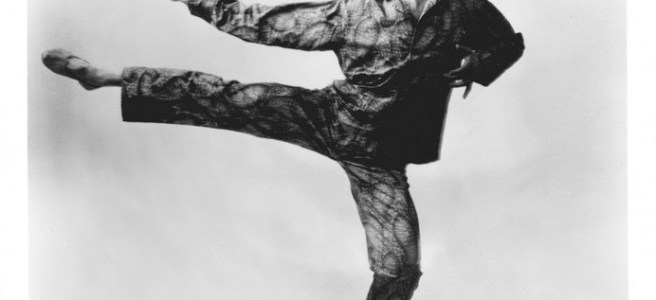
“They don’t want to deal with people. They want to deal with things. They want to deal with extensions and plies and beats and words that don’t have to mean anything. They’re not interested in people. They’re not interested in you. They don’t plumb your depths. In other words, they’re not humanists.They’re playing with things. They make dance a thing. A thing.”
(interview when he was 85 years old, talking about post-modernism in Dance, exemplified by Merce Cunningham’s style).
Danile Nagrin was an actor and a dancer, choreographer and teacher. He wrote, among other books “The Six Questions: Acting Technique For Dance Performance”. He was deeply influenced by Stanislavski’s Method, and a fierce humanist.
I’m a fan!!! And we have something in common… in the Introduction of The Six Questions he says: “I may believe fiercely, but I’m sure of nothing.” (italics are his) If you read my ABOUT, you know that’s exactly how I feel.
Link to the interview is: <http://jashm.press.illinois.edu/12.3/12-3Interview_Roses-Therma114-119.pdf>
Dance x Theater, why so different?

What are the differences, and similarities, between Theater and Dance? I began to think about because I always wonder why acting, in Dance, is so peculiar. I’m by far not an expert, but I can figure at least some common-sense answers for myself:
- Both use live human beings as their media
- Both use stage
- Both have thinkers (writer/choreographer) , doers (actors/dancers), and enhancers (designers)
- Theater specifically uses voice to communicate through words
- Dance specifically uses the body to communicate through movements
- Through the voice you can easily express any kind of idea, even complex ones, like Marx ideas about added-value, or how to solve Pithagoras Theorem
- Through the voice you can express emotion, but the voice alone rarely is enough, almost always body-language will have to be added
- Through the body you can NOT express complex ideas,
- Through the body you can easily express concepts and emotion
- Theater sometimes uses technology to override its media limits (microphones)
- Dance uses no technology except pointe-shoes (interesting idea: if Theater uses microphones, could Dance use spring-boards, or roller-skates? ok, ok, no need to shake yourselves in horror, I was just wondering…)
- Both produce a structured result: there is a text/choreography to be delivered, there is a chronological and spatial organization of things.
- Both must “touch” the audience with their product, must express something that makes people care, be stirred, be enchanted, be shocked: both must ellict an emotional or intellectual response in the audience, or are pointless. I will call this “magic”, because its simpler and sounds so good.
They are not so different, are they? Their media is different, the range of ideas and emotion they can express are not coincident, and Theater has more freedom, in that it not so limited to and by its principal media. And there are a lot of similarities…
BUT. This was theory, in practice differences are greater.
Acting, HOW you express whatever there is to be expressed, is very different. In what ways, exactly?
To begin with, in classical Ballet and in some contemporary Dance too, some believe Dance should be pure Form, no acting at all. I quote Mr. Alastair Macauley:
“Ms. Ferri, a captivating nymphet from the first, soon became a star in the sexy, histrionic dance-dramas for which MacMillan was best known. During her years with the Royal Ballet (1980-85) she was in danger of becoming its onstage Lolita, with less technical precision and strength than a complete ballerina needs. (…) Remembering the astoundingly liquid beauty of her graduation “Concerto” performance, I can’t help sighing for the pure-dance side of Ms. Ferri that her audience has never seen again”.
(…)
“Some ballerinas are freaks, bizarre extremes who make you see only the oddness of the art, but Ms. Bussell shows you its rightness, its proportion, its glory, all on an immense scale. No, she’s not an actress.”
Art as pure Form involves complicated discussions even among experts, totally beyond my undestanding, it seems its defenders believe that “aesthetic experience” (this is how the particular kind of response to just Form is called) is capable of changing things, or someone.
In my common-sense, probably gross and oversimplified way to see things, “Art” as pure Form is created mostly by “artists” that are no real Artists, during, but mostly at the end of an art movement (I mean Gothic, Barocque, Symbolism…), using just the typical formal elements of that movement (and insisting on using them even when this movement has run its course and is emptying itself because of social and culture changes), without being able to add the necessary Content that creates magic.
AND “pure, spiritual aesthetic experience”, from a psychoanalytical point of view, sounds like sublimation: if you are sublimating person, you will want to avoid real Art, the kind that needs Form+Content to create magic – because you will want to avoid the kind of response it ellicits in you. But that’s another discussion.
Anyway, there ARE a lot of Dance works that use acting in some way. So, let’s see.
In Theater, if you want to make people THINK, that is, an intellectual reaction, you use “defamiliarization” or “estrangement”, a formalistic approach. It’s used mainly in plays with denouncement goal, on social and political issues. Almost always estrangement is already embedded in the text, and/or the staging, like in Brecht’s plays. Even in formalistic Theater plays, however, the actor is almost always asked to perform in the non-formalistic way.
You use the non-formalistic way when you want to have an emotional response. You will, in this case, try to believable, to be true to life, to be just like people in the audience are, or could be, so they can identify themselves with what is going on on stage. Both text and acting must try to acchieve that the audience “suspends disbelief”. This is so important, a lot of methods and techniques were developed in the last 130 years to help actors to be believable, like Stanislawski’s or Lee Strasberg’s.
This is Theater, but what is acting in Dance?
Well, I know what it should be: exactly like in Theater!!!… Why? Because IT WORKS, obviously…
Instead, in Ballet, the most popular kind of acting is what I call “larger-than-life” (neither of the above – and it may have a proper fancy name). It resembles closely the silent movies made around 1910-20: extra-grand, abrupt gestures, exaggerated facial expression, staring eyes, and so on. This kind of mime is considered good acting in Ballet, but in Cinema and Theater it was already in total disuse in the fourties (that’s at least 70 years ago!!!) – so Ballet is this small island of anachronism in XXI century – that has still it’s fans: its own, private, small, anachronic audience.
AND Ballet has no magic outside this audience.
Thought Experiment——————————
I’m a school principal, and want to turn my older students into Dance fans. They are regular teenagers, living in a a regular city zone, tattoed, chewing-gum youths who love videogames, rap or rock, and their smartphones.
So I show them Yacobson’s Spartacus (lonk below)…
…
Can you imagine their reaction?
I can think of many works I could show them instead, Petite Mort by Kílian, Facada and Mercy performed by Vasipova, Friedeman Vogel’s Mopey, Moonstruck (link in this blog), Hasta Donde by Schorman, Chekaoui’s Puz/zle, Bolero performed by Sylvie Guillem, any ballet by Eifman, Serenity by Arsen Mehrabian… What is their reaction now?
… see my point?
To hook them , at first my selection has to address issues that are central in their lives (it must have Content): relationship problems, sex, violence, with lively, beautiful and original choreography and staging (its Form has to be in tune with our times). And I have to make them realize that male dance evolved and is now striking and manly, or the whole football team and their fans will simply dismiss the whole thing.
Now that the chewing-gum crowd realized Dance is cool!, I may proceed to a nice passionate version of MacMillan’s Romeo and Juliet (Ferri & Corelo’s, for example), or Notre-Dame, or Bourne’s Swan Lake, Le Jeune Homme, Mayerling. By this time, Grigorovitch’s Spartacus (Ivan Vasiliev performing!) would please not only the girls, the football team would find it awesome! They would become used to Ballet’s visual and learn about dancing skills and difficulties, and eventually I could bring them even an entertaining classical one like Don Quixote (although the middle-part, like in Flames, would still bore them).
But see, I believe Yacobson’s Spartacus would Always be out of limits, no way they would think it cool, unless as something-so-absurd-it- is-funny-to-watch!
Out of limits too, would be Sherezade and Le Corsaire, they are excessively kitsch, plot included, and that is an unforgivable sin in their “Weltanschauung”… But there are classical ballets that, with a less traditional (meaning kitsch) production, less mime and better acting, could please teenagers, and a far wider audience too: The Prodigal Son, Raymonda. In their present state, however, most would be out of limits too – they may have an appealing Content to teenagers, but their Form is so dated they cannot grasp or enjoy it.
An old choreography, production or performance is really timeles (Art…) if it is able to eventually interest someone young that is NOT a dancer – this is my criteria to judge them, sorry if you don’t like it! There are many ballets that have great value inside the Dance millieu (mentioned audience included), but cannot please, or have no interest, to a wider audience.
Pure-form Balanchine and pure-form contemporary would probably bore them to death…
You may say: my students are of NO interest as audience , at all, how could Art please such unsophisticated, unprepared… creatures?
OOOoohhhh! But that’s precisely my point! When Art is REALLY (love this word, specially in uppercases!) Art, it does not need a special audience, it has “magic” to anyone! My creatures would be perfectly able to enjoy a good, powerful performance of Shakespeare’s Macbeth , for example, I bet they would even turn their smartphones off… If they cannot enjoy Dance, it’s because there is something wrong with Dance, not with them!
UPS!!
Now I make a fast exit to the left, before someone damages his notebook trying to throw things at me…
————-
Here is a link to a few seconds of Yacobson’s Spartacus, performed in 8th-grade Vaganova’s acting exam, followed by some professional performances. Watch, and imagine!
Moonstruck!
Are YOU moonstruck? Well, I am!! Full moon, to me, means imsonia (more than usual)!
I certainly can vow for this Milena Sidorowa’s piece! I had to laugh aloud as I watched it, it’s SO perfect! At 2:23, that’s me, at 5:00 in the morning, beyond all rational thinking, daydreaming (I mean, dawndreaming) about being a dancer again…
Milena Sidorowa is a talented young dancer and choreographer, there are few clips (look in her YouTube’s channel ‘waltzish’), but I like them, they are expressive, fluid, and fun choreographies (although her Spider choreography belongs more to a ‘What’s your Talent Show’…) – she´s certainly one of the ‘off-limits’, irrepressible ones I like so much!
Quote of the Day – Marcelo Gomes, choreographer
‘For me as a choreographer, it is important to give the dancers something to think about and a certain freedom of expression in the context of the production. I really like it myself when the choreographers give me this opportunity.’
 Full of Dance