Dance and the Acting Challenge

One of my recent posts was about the wildly different expectations that different kinds of audience have when attending a ballet evening – that explain why so many leave necessarily disappointed.  Now, I’m addressing a certain kind of audience, MY kind, most of all – the premises being: good acting is important, body-language is important, meaning is necessary – technique must be subordinated to them.

Different from theatre and movies, where natural, life-like acting is used almost 100% of the time, in dance there are many choices.

Believable Acting
“Suspension of disbelief”: Vanessa Redgrave – Heath Ledger – Johny Depp – Adrian Ross Magenty, Emma Thompson, Helene Bonham-Carter

No acting at all is the first of them – and the strangest one for me: that a performance art should give up meaning, that dance should give up body-language, and become just pure form!

Then there is formalistic acting, more than one kind. The traditional one is grounded on century-old mime, and looks very strange to me, but has fierce fans. More modern kinds are used mostly in contemporary dance, usually a choice made by the choreographer himself, and I can see their value, even if it is not the kind I like most.

Traditional mime
Giselle’s mother warns her of her weak heart, and the risk of death.

And finally believable acting, of course, the kind that “suspends your disbelief” – the only kind I consider GOOD acting, and the most difficult one.

So there are choices to be made by the choreographer, or even the artistic director, and then by the dancers themselves. I always hope they choose the kind I prefer – that theatre and movie actors prefer -, but there are so many obstacles to see my wish fulfilled!

The training

In the great Ballet Schools acting is part of the program, but not a central one, it remains far, far, very far behind all-important physical technique – with special care to traditional formalistic mime.  A dancer with natural acting skill is always in danger of having to un-learn intellectually what he already knew instinctively…

The training in Contemporary Dance Schools and in Performance Arts courses in universities is a lot better, but aimed mostly… at Contemporary Dance, of course! And for all I have seen, emphasis is on expressive choreography (a good, very good thing, by the way!). So what about the classical trained dancers?

Needs x requirements

There are so many dramatic ballets, by so many important choreographers: Tudor, Ashton, Balanchine, Jerome Robbins, MacMillan, Neumeier, Liam Scarlett, Grigorovitch, Ratmansky, and on it goes… These ballets deserve good acting! These ballets NEED good acting!
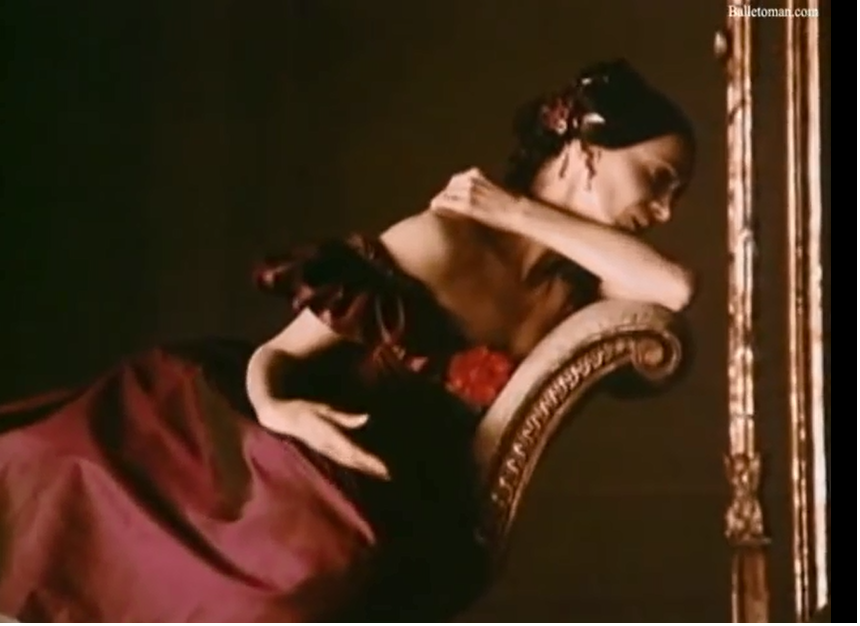
Marcia Acting
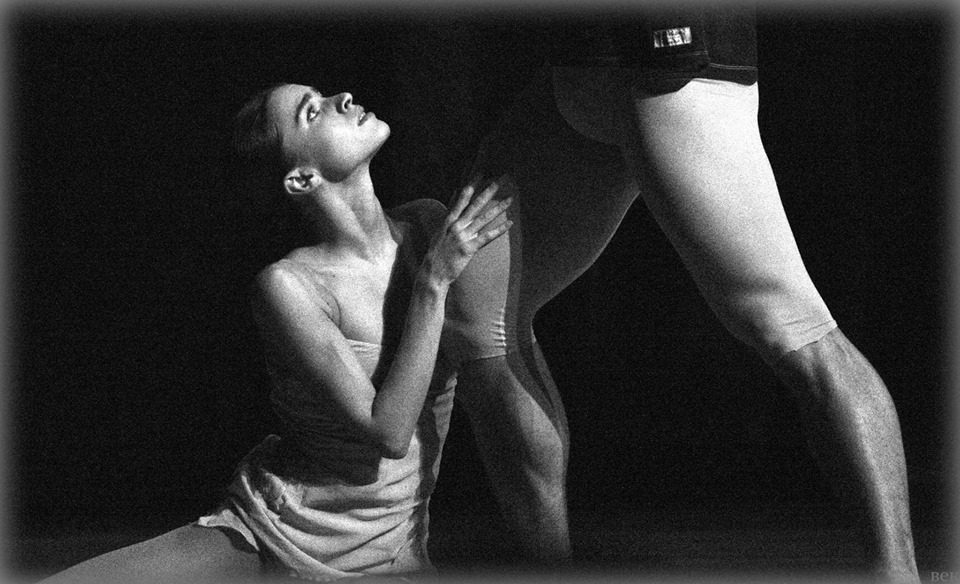
Marcia Haydée – Lady of Camelies (Neumeier)

But acting skill, and I mean GOOD acting, is NOT a real requirement when selecting, promoting or hiring a dancer – again, physical technique is far more valued!

When it comes the moment to perform, however, all expect (at least the audience does!) the dancer will know his acting! What do dancers do, then? Try to be the best they can, learning maybe from his fellow-dancers or by themselves… not an easy task, either way – his fellows are at a loss just as he/she is, and learning alone has limited efficacy and is time-consuming.

The traditional Standards

Many dancers complain of the tight acting standards they must obey in the big companies, that go from a prescribed way of acting to an open disapproval of any display of individuality.

Type-casting

This is a tough one, that wastes the rare natural acting talents in roles that do not require acting, and also the contrary, using in dramatic roles dancers that do not have (“my” kind of!) acting skill.  A real shame!

Alina Somova as Juliet
Alina Somova – Romeo and Juliet

The audience…s

There are several kinds of audiences, with different expectations on acting. Choreographers, coachers, dancers, artistic directors, when they make a choice, are also choosing the kind of audience they will be addressing – it is impossible – read that again, I beg you: it is IMPOSSIBLE – to please all of them at the same time! It means that, if we ALL keep attending ALL kinds of performance, THEY must know they will certainly displease many of us… an uncomfortable trap!

Acting Itself

When a dancer is cast in a dramatic role, and willing to make a good job, he/she has challenges to win that are intrinsic to acting.
To make a character believable, it must be coherent throughout the play, and, at the same time, full of nuances – no matter what kind of character.  This requires a deep understanding of the human being, and great empathy, to perform even someone the dancer is not, or does not feel like.
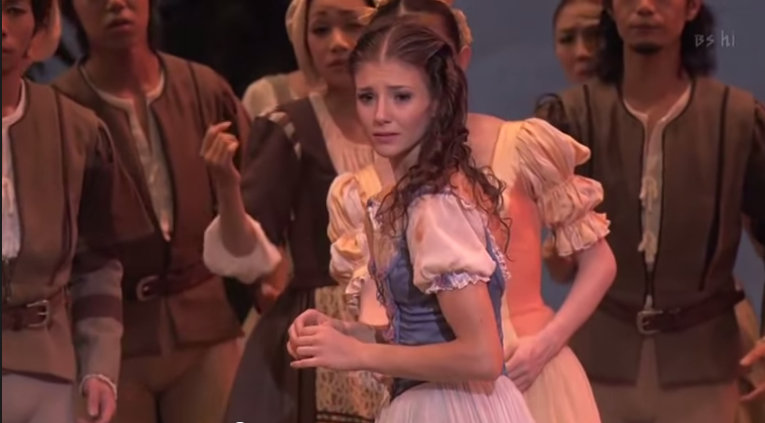
Alina - Giselle 1
Alina Cojocaru – Giselle Mad Scene

He must also grasp what the choreographer, and the artistic director, intended from his character, and incorporate these intentions to his own interpretation.

The role he creates cannot exist alone, it must interact believably with the other roles in the play – may the other dancers be good actors, too, or not!

The dancer is not acting in front of a camera that can show the slightest tremor of the lid – he must reach down to the last rows – and THIS requires great skill!

He/she must be able to create on-the-run empathy, to feel how we-seated-there-in-the-dark are reacting, and make us follow, feel with he wants.

And last but not least, he/she cannot be self-conscious! On stage, an actor cannot be Mr. X making a careful performance of Macbeth… he must be Macbeth himself – as a dancer cannot be Mr. Z performing Armand, he must BE Armand. When acting is good, you forget about X and Z, and see only the role. Not an easy feat… careful, self-conscious performers as most dancers are!

While dancing!

4_194451
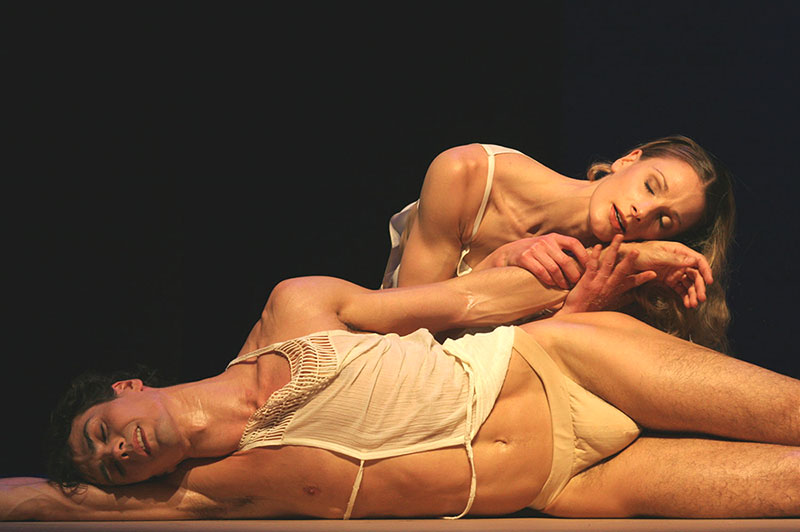
Alessandra Ferri and Hernan Cornejo – Cheri

All this challenges, of course, must be faced while making a great display of balletic technique, caring for the partner, finding his cues and place on stage, following the music…
—————————–

Is it not incredible that the acting of some dancers, despite all that, is able to blow me off my feet? More than that, is it not incredible that some of them blow me off my feet, not at the expense, but while displaying great dancing?

Awesome creatures!

Some of them are as good in dramatic as in comic roles, like amazing Alessandra Ferri, or great Manuel Legris… Some of them are as good seen from afar as in a close-up, in fact good enough for an Oscar (now I’m thinking of Alina Cojocaru)…
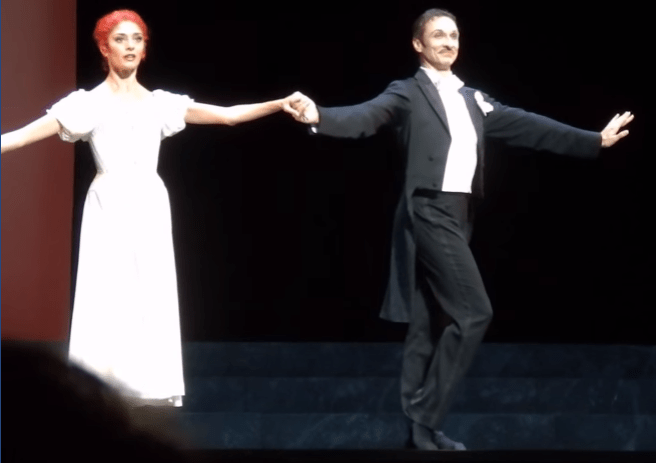
Manuel Legris - Die Fledermaus
Ketevan Papava and Manuel Legris – Die Fledermaus – Click on image to link to video, it is delicious!

They are ALMOST inexistent in the triangle USA/Russia/England (I’m sorry to say that, but it’s true!), most dancers who are also good actors come from France, Germany, Spain, Latin America… a handful of them nowadays, no more – with so much obstacles, if the dancer hasn’t natural skill, and a persistent drive to use it, he is doomed.

 In the newest generation they are even rarer, especially in classical ballet. It is not surprising – nowadays Form and perfect physical technique are valued much higher – overrated, I would say – and not only in Dance, it is a wide-spread characteristic of modern society! Content? meaning? well, so long it does not overshadow technique, it may receive some attention…

The greatest exception between the younger ones in Triangle of Bermudas of acting is Ivan Vasiliev, the only one of his generation to cope with the whole array of acting challenges from the start, with flying colours. He is able to bring life and meaning to any role, tragical or comical, from Czar Ivan, The Terrible to Colas in La Fille Mal Gardée – besides having a wealth of other qualities.

282231_358283357586310_1238396483_n

He must make deliberate choices about each of his perfomances, because the outcome is always unique and specific, deeply coherent in both the dramatic and technical dimensions of the role.

Ivan Vasiliev, of course, is not unanimity in the audience, as no other dancer is – one could not expect THAT with so different kinds of public. Maybe he is aware that the choices he makes will please many of us, but not all – those like me, luckily, seem to be priority number one in his book!

02ivan-vasiliev
Le Jeune Homme et La Mort


I wish more of the classical trained younger dancers were like him…

After all, concert dance is a Performance Art! Or is it possible to disagree even on that?

Spartacus? Sleeping Beauty? Jewels? N.N.N.N.? or… What makes us tick!

jewles x NNNN

Dance as Form+Content – meaning imparted through dance, the importance of body-language, good acting – is this blog’s theme, my theme.

Now I believe, however, that the way I was taking is unfair: I must not fight other kinds of performance. Most of my former posts fighted fiercely anything different from what I value.

ReproachfulEventually I realized what we all need – we, belonging to the several kinds of public that dance has – is to have a clearer understanding of what we want from a performance, and a clearer understanding of what each choreographer’s, director’s or dancer’s style and premises and goals are…  so we can attend those performances that make us happy, instead of complaining and criticizing those that fail us (mea culpa, I’m included here)!

Performances may fail to please us NOT because of incompetence or bad taste or poor quality, but just because what they are bringing us – what they on stage priorize – is not what WE put more value on. To begin with, we must be able to grasp how diverse WE are. A few examples.

During VERY stressful times, I may want to defend myself from any additional stir -good or bad, it may shake my balance even more.  This might explain why so many love Pure Form dance (ballet and/or contemporary alike): they want an intellectual or aesthetic experience, a predictable one, and no more – they want to be able to see something beautiful that does not immediately remind them that… life sucks! we do not live in easy times! Pure Form dance is one of the last strongholds of Art where you can see beauty with no demands on your emotion! There are certainly several in the audience feeling that way!

There are those that need to sublimate their pleasures – for them dance must be pure and idealized, nothing that reminds of individuality, sensuality, physicality and feelings, must be visible. If you think they must be few, remember how prude classical ballet is… in fact the only prude kind of Art nowadays!

The do-not-disturb-me and the sublimating kinds of audience will welcome and value the beauty of staging and costumes, the purity of lines, whatever physical feats their knowledge enables them to recognize, beautiful dancers with idealized looks, no plot (or a plot far away from reality).  A very expressive choreography, or very impressive acting – too much meaning – will truly spoil their pleasure! They prefer works where no acting is needed, or a formalistic one is used. For them, dance must bring peace of mind and heart!

Than there are those who were dancers themselves, maybe successful, maybe in a life-long struggle… these will have little patience with novelties – they are there to remember and revive, to envy, admire or reproach new performances of the same pieces they loved to dance themselves.

Aurora x Spartacus

There are those who are competitive active professionals, who attend to evaluate and rank, positively or negatively, those on stage with other performers and themselves… it is not their intention, but they are almost hoping for flaws! They are the ones with keen, bright evaluating eyes and wrinkled noses…

Dancers and ex-dancers are not a small part of public, they may be up to 60% of the audience!

There are those who seek Art because it gives them a way to connect with great truths and deep questions about being human, to be reminded again of what life is really about. For these, Dance must have meaning, more than anything else – for them, physical technique should, and must be subordinated to Content, all they ask is the necessary and sufficient level needed to impart Content, and they value good, believable acting, expressive choreography  and body-language very high. For them, dance is one of the most powerful kinds of Art.

There are those that don’t know the first thing about dance, but attend the performances because it sounds so sophisticated when you tell your friends…

There is the great-show-loving kind, who comes for easy emotion, a lush staging, impressive music, outrageous, easily to recognize feats, special effects, gold and sparks, in short, great entertainment. They don’t care about meaning or if there is acting at all.

I could go on, but I believe I already made my point. Of course, I exaggerated and oversimplified these characteristics, but even so, you recognized yourself and others you know, didn’t you? And remember, critics are not gods, they belong to some kind of audience too!

The big problem is, we ALL go to ALL kinds of performance, probably because there are so few of them (dance productions ARE so few, compared to other Performance Arts!), and a great part of us leaves disappointed… if not angry!

And that’s my point, you know? Let’s fill our glasses again and think together:  if your priority is Form, whatever the reason you have for that, why don’t you stay away from performances where you KNOW this is NOT a priority?  there is no NEED to go see them, is there? As I MUST not go see what, for me, is just pretty-but-bland technique display, if it is not the kind of performance I like (if I would go, I would, out of pure boredom, search, obviously, for the kind of flaws that bother ME! mea culpa, again!). It makes no sense, and anyone of us who likes theatre, movies, opera, music knows how to choose! So why don’t we choose when it comes to dance.

ReproachfulThis is true even if I’m critic! Then I will not have to write texts that are a long sequence of good-but-bad phrases like “Her … was gorgeous, but, disappointingly, she…”, and have, in the end, my readers more confused than before: was it worthwhile or not?!!?? Or worse, when feeling acutely uncomfortable with a staging or performance, and not being conscious of mine/their disparate premises and goals (so out of objective arguments), I will not be reduced to criticize the performer’s (assumed) personality or feelings, or gossip about his private life… leaving my anyway not very motivated readers – more than ever – wishing distance from such a messed up dance community!

Dance deserves a wider audience, and can please all kinds of audience – just not all of them at once! We should not attend, and then harshly criticize, productions we know have different premises and goals than ours. I realized I must treat them more kindly… respect difference!. Let us treat OURSELVES more kindly and respectful, and attend the kind of show, and see the kind of performer, we know intends to address US, that tries to come up to OUR standards…  we will know better, then, how to evaluate them (or at least to criticize fairly)!

It brings us no credit that we like A, go see performances that strive for B, and then criticize them for not achieving A!  WE are being unfair and… making a public statement about our short-sightedness! Let us be more aware, and happier?


Ivan, the Amazing As Ivan, The Terrible

The Bolshoi announced that Ivan Vasiliev will perform Ivan, The Terrible on 14th and 15th April. His partner will be delicate Maria Vinogradova – all made of beautiful lines, and a good actress herself. Both evenings were sold out before you could blink…

1656398_820568774676775_8393239452169082439_n
Maria Vinogradova and Ivan Vasiliev rehearsing Spartacus

Prince Rudolph, that he will be performing on 11th April, and The Terrible are roles where Ivan Vasiliev can use ALL his skills… and at full power.  There are not so many roles of that kind, so that both will be in his repertoire now is great news!

John Neumeier – Creating on Emotion

Spring and Fall - ENB
Photo: Spring and Fall – ENB ………….. Link to video: Spring and Fall – Hamburg Ballet

It’s about time I start writing about choreographers. Last night was again a sleepless one, and I spent hours watching different stagings and performances of La Dame aux Camélias, choreographed by Neumeier.

Conclusion? all performances are beautiful, no exception. La Dame has such a lovely and expressive choreography, on such lovely music – it may even be performed (and sometimes is) by dancers that have not that great technical or acting skills – it doesn’t matter, its beauty is impossible to spoil.

There, I believe, resides Neumeier’s greatness: what he creates has a life of its own, his choreographies are in themselves objets d´art. They can be shown in a better light, when performed by great dancers (and then they become a regular WOOOW affair!), but their magic does not depend on dancers as some other works do – it’s the other way round,  his works HELP dancers make a great perfomance.

index
Photo: La Dame aux Camélias – Marcia Haydée, Ivan Liska and Neumeier ………….. Link to video: Marcia Haydée, François Klaus, Ivan Liska in a most extraordinary scene

Neumeier is, by his own definition, a choreographer of human feelings:

“I’m a choreographer who works from emotion, from relationship, from situations, human situations, I try to make these situations as subtle, as different, as many-sided as possible. I never thought of Dance as anything else – ever – but the expression of a person’s emotion. For me Dance is not sport, it is not an acrobatic exercise, it is a physical expression of complete humanity. Dance is not really an Art form, unless it can express all that being human is.

*****  Ok, Neumeier, give me your feet so I can kiss them!

La Dame is certainly one of my favourite works – as everyone elses, I bet, but he created so many exquisite jewels: Spring and Fall (another favourite), The Little Mermaid, Death in Venice, Nijinsky (high on my wishlist), Liliom,…

Photo: Nijinsky…………. Link: the Bubenicec brothers Jiri and Otto as Nijinsky, and Anna Polikarpova as Nijinsky’s wife – a must see!

Most are at once lyrical and like sandpaper on soft skin – a tenderly done punch in your stomach. The Little Mermaid he created: of course! he is so right in the way he depicts her – in my mind (and heart) she is not, any more, like the lovely drawing in my Andersen book, but looks and behaves like Yuan Yuan Tan – and stands for anyone who feels alien and fragil in a strange hard world. He makes you ache inside…  and keep wishing for more.

The Little Mermaid - Yuan Yuan Tan and
The Little Mermaid – Yuan Yuan Tan and Tiit Helimets

His works are often explicitely sensual, and no way to go around that – prude ballet-lovers are advised to stay away, sexuality is definitely there, under bright spotlight…  I recently saw a performance where Margherite and Armand just suggest the (choreographed!!) kisses in their PDDs, as if they were dancing a virginal Nutcracker instead of a courtisane‘s passionate story… I almost can see the frown on Neumeier’s brow!

Male dancers have lots of wonderful opportunities, sometimes more than women, but ultimately which gender gets more to do – and spotlight – depends on the subject and the plot –  it is just one more example of his honesty when choreographing.

Some things I love about him: the clever way he uses classical ground-stones to create something that is all his own; his themes and the way he handles them; the way he uses choreography to express feelings and ideas (never a dreadful outdated mime, relieved sigh!) . Then there are the great scores he – thankfully! – chooses, most are as nice to hear as to see danced. And he prefers dancers who know how to act (no wonder Alina Cojocaru is one of his favourites!). There are a lot of them in Hamburg: Silvia Azzoni, Helene Bouchet (love her!), Carsten Jung, Lloyd Riggins, Otto Bubenicek, Alexandr Trush, … It may even be that in Hamburg acting skill is a requirement to become a soloist or principal (hhhmmm, nice!)…

Alexander Riabko and Kusha Alexi   -  Joseph's Legend
Alexander Riabko and Alessi – Joseph’s Legend

But there are things I don’t like: in his stagings (he is keen on them, sometimes they are his own design), costumes are often unnecessarily ugly and unbecoming, and I highlight unnecessarily – AND not always easy to dance with. Costumes should never, NEVER be a problem to a dancer. I know you are thinking about the Mermaid, but even in La Dame those full skirts of Margherite, pretty as they are, are inadequate to the kind of complicated lift often used in the choreography. All that fabric is always in the way, or end up in a ball around her throat, or completely blind poor Armand… And then that napkin that is Joseph’s costume… or did they wash the thing and it shrinked to half its size?  In Ivan Vasiliev it would look like a tie!

Also, when he goes really contemporary, the choreography is somewhat less pleasing to the (my) eye than in his a little more traditional ones.

UPS! These last paragraphs sounded like an unsophisticated, or worse, uncultured critic, didn’t they?

In my original text, at this point I started a sidetrack to justify my apparently close-minded opinions. But the thing became too long (once again),  and I turned the whole sidetrack into an independent post (soon) . It was a comment on contemporary choreography, anyway, not on Neumeier himself – and if you don’t know me, don’t get the wrong impression: I love contemporary!

Never mind these “dislikes”, however, they are triffles that don’t make a dent in my admiration – he is placed VERY high on my Hall of Fame.

On my wishlist are also the updatings he made of several classics – but these I didn’t see, so I have no opinion on them, yet (was that a relieved sigh from you?!?).

A writer describes Scottish Ballet’s A Streetcar Named Desire

After the bleak post on Royal Ballet, an uplifting one!

Some time ago I was giving some (just common-sense) thought to the differences between Theatre and Dance, so I was deeply interested when I found today this comment made by Aidan Ryan, a blogger who describes himself as “writer, traveller, duellist and scapegrace”. Aidan went to a performance of A Streetcar Named Desire (I already mentioned Scottish Ballet’s version when I quoted Tennessee Williams). The last ballet he had seen, as far as he could remember, was a Nutcracker some 15 years before – so we can firmly place him as non-expert, “wider” audience.

183643498955081ce0e2cd51.30064301

Aidan is a writer, and as you would expect, he missed the words!, since Tennessee William’s writing is not just any writing, it is the work of a master – and he was sure everyone else was missing them too.

BUT…

… the title of his post is “A Triumph on Calculated Loss.” Quoting:

 “Even audiences just as accustomed to dance as to drama found themselves aching for a human voice through most this production, but this feeling was only a footnote to our encompassing awe at director Nancy Meckler’s and choreographer Annabelle Lopez Ochoa’s gamble, really a calculated loss, to sacrifice the author’s words to more freely interpret his spirit.“

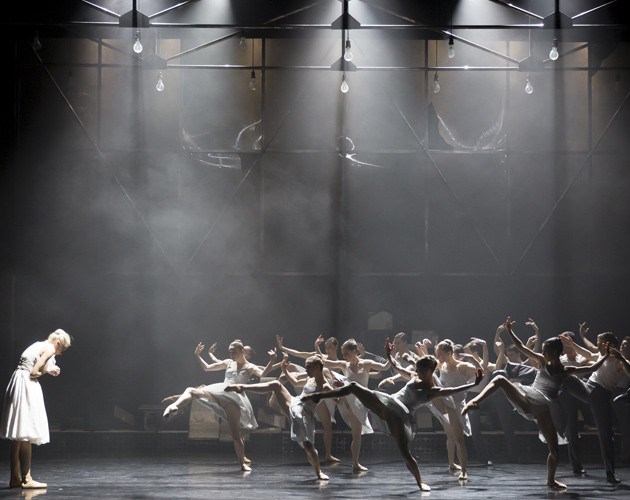
“If the Scottish Ballet proved anything this past week, it was that the form lends itself brilliantly to this sort of drama.  Blanche (played by principal dancer Eve Musto) here becomes a multiplicity: she is not one dancer onstage but a whole company – ghosts, half-ghosts, a score of black-dressed dancers with roses for mouths – and we watch as she calls on other bodies, parts of herself, to manifest the internal reality she battles, always under the 28 bare bulbs that hang above the stage. “

6a00d8341c2f0953ef016304316aab970d-700wi

“Sometimes watching drama adapted into dance is like watching a couple fight through the window looking into their apartment.  The show is mute, we feel our distance more acutely and inescapably than in traditional drama – but we cannot look away.

Other times – many times, during Streetcar – the choreography is so natural, so expressive hate and frailty and wild unstill spectrums of sexuality that we think it must have been improvised, the dancers possessed in some enthusiasmos and ecstasis, channeling the old gods’ emotions which human feeling is based upon.”

“The brute Stanley and the battered Blanche shed the layers of complexity that made Tennessee Williams’ one of the twentieth century’s greatest playwrights – though having done so, I suppose, they danced more freely, emoted more purely and therefore on a grander scale.”

“Meckler and Ochoa turned away from the nuance of naturalist theatre and reached instead for the power of archetypal feeling, operatic emotion.  And they succeeded.  This was never more evident than in the ballet’s climax, which took the implied rape in Williams’ script and made it brilliantly, brutally explicit, in choreography that left eyelids inoperable and mouths agape.  (“Nothing like a little bit of rape on a Saturday afternoon,” the Scottish woman beside me said to her friend after the final curtain had fallen.  It was a comment still half-nervous, possible only after the calming interlude of clapping.  We were all still in awe.) Peter Salem’s score was so powerful here that it seemed to become a physical part of the set, with a sound like pulsing pain or a beating cut vein amplified in the cavern of the head.”

[[ Link to complete post ]] and

[[ Link to trailer ]]

I was lucky to find Ryan’s description.  It is a spontaneous, real example of this blog’s most important point:  Dance can reach, can enrapt, can create magic for anyone, no need to be an “initiate” – provided it has Form and Content, provided it is able to suspend disbelief, provided it reaches decisively into what makes us human.

Dance is not better, worse or even complementary to Theatre – it is different! Like Music, it can bring you another kind of experience, grounded on more deep-seated, atavic roots. If things are made the right way, the kind of experience you cannot forget. If “things” are not just technique and form.

…two hours of passionate dance still playing in afterimages behind our eyes…

BRAVO, Annabelle Lopez Ochoa, Nancy Meckler, Scottish Ballet!

———————————————–

… and one more live performance on my wish list (sigh)!

Royal Ballet’s Swan Lake and Mixed Feelings

Natalia Osipova/Matthew Golding/Gary Avis in Royal Ballet's Swan Lake, 4th Act
Natalia Osipova/Matthew Golding/Gary Avis in Royal Ballet’s Swan Lake, 4th Act

I had mixed feelings reading Jim Pritchard’s review of Royal Ballet’s Swan Lake on 17.03.2015, Natalia Osipova, Matthew Golding and Gary Avis in the leading roles.

[[  LINK TO COMPLETE REVIEW ]]

I could insert quotes, but his review is worth reading. He is, of course, just one voice in the Tower of Babel of opinions – you may trust it or not – as you may agree with me or not, but most reviewers remembered they do not like this production’s scenario and/or costumes and/or the “butchered score” and/or mime. More than one mentioned ENB’s production, and Ivan Vasiliev’s Siegfried in comparison…

It could be a good feeling, to know that other ballet-lovers see what I see – only I wish we were wrong, because such waste of talent, in such costly productions, makes me sad. And angry.

All aspects Pritchard mentions are in tune with posts in this blog: the garish, cluttered scenarios (see Swan Lake turned into Theatre); the fact that Siegfried has no opportunity to dance (see Graceful Dancers Part 2); Natalia Osipova, despite outstanding technique and careful acting, being unable to create “magic” (see Graceful Dancers Part 1, and About Kings, Battles and Muses...); about Matthew Golding’s bad acting, resulting in a pale performance compared with Ivan Vasiliev’s Siegfried (see Ivan Vasiliev Acted Socks Off); the damping down of individuality by excessive coaching, in a misguided effort to keep Dame Fonteyn’s style alive forever (see I will write a lot about Ivan Vasiliev); the fact that men who are not dancers run away from ballet performances  – what kind of “art” is this, that pleases mostly women and old people, having no interest for others? (see Dance, know thy Audience).

He does not mention, however, the dreadful, excessive mime, but I will! Last act is available on the web, you can judge for yourself.

[[ LINK TO ROYAL BALLET’S SWAN LAKE, Last Act).

4th Act has such an overload of mime it turns real acting into an impossibility! Osipova dutifully uses all prescribed (exaggerated) facial expressions and movements, but they are a poor substitute for the real thing.  I wish she would rebel… She stated, during rehearsals, that she was “still looking for his (Matthew Golding’s) soul”, indeed! How would she find it, if she did not allow her own soul to be there?

Ill-guided, misused, under-used, all these fabulous artistic and financial resources. How much longer will audience be forced to look for (empty) movements -“athletic delivering”, “beautiful lines” and “whipping 32 fouettés” – as the best you can get out of a performance?

I may be right, but there is no self-satisfaction in the notion – I would much prefer they had proved me wrong.

Loosing Mademoiselle Non

Sylvie Guillem announced in November that she is retiring, this time for good – she will dedicate herself to animal protection initiatives. I love animals, but I love Dance more, and it makes me very sad. I had hoped she would coach, or choreograph, or teach, or manage a company. That All She Is will be lost for Dance is very hard to accept. I hope someone lures her back, somehow…  Alessandra Ferri came back, to my great joy, didn’t she!! So maybe…? e3eb186fc2d05e792a9cca816a3f0825

I have so much stuff on her, I could write a book, but Ismene Brown wrote in a way that couldn’t fit better any better what I feel about Mademoiselle Non, and in better English, so I will make some lenghty quotes. If you already read it, and what Sarah Crompton wrote, too, you know what I mean. (Links in the end). Ms. Brown quotes are in bold letters, my comments in normal format, and Sylvie’s in italic.

If you follow dance or music closely, make them part of your life, you look on certain performers as your daemon. These are the artists who become part of your inner landscape. They act as a tuning fork for your emotions and imagination. And you mark their progress with particular hope that you won’t be disappointed.

(I know what she is talking about, I have my own daemons, both in ballet and music, and I, too, hope…)

downloadWhen the 25-year-old Sylvie Guillem arrived in London in 1989 from Paris Opera Ballet, with a flaming reputation as Rudolf Nureyev’s prodigal daughter, one’s first reaction was wariness. She seemed so flashy in her incredible bodily gifts. In Swan Lake, this Swan Queen showed no modesty in her headlong dives — the legs shot up in perfect verticals, they described high circles with the triumphant grace that only ultimate hard work of an ultimate natural ability can bring. We kept talking about those legs.  But you don’t adopt a dancer as your daemon because of her legs. For at least 20 years Guillem has been regularly described as the greatest ballerina of this era, as the art’s game-changer.

sylvie-rehearse_1934699b

 Ha-ha!’ She has a very infectious laugh, like a peal of bells. ‘Well, I suppose it’s better than being the worst ballerina of the time. But a lot of people will say to you that they can’t stand the way I dance, they hate me. Bon. You can’t please everybody.

I wondered how conscious Guillem has been of the audience to whom she has been an exhibit all these years. She said she can’t see much from the stage. ‘When you can see them, people are sometimes a bit embarrassed about being seen. When people started sending me personal messages I could see it wasn’t just a good time that they were having for an hour or two at the show, it was having an effect on their lives. People would say, “Please never stop, you’ve changed my life, I wait for your show, to travel and see you is important for me.” It’s scary in a way too but it becomes a responsibility, a duty not to deceive them.’  …  Mademoiselle Non insists that her more sceptical mission was always to search for purer and more direct emotional contact with the audience, on behalf of the characters created by the choreographers, not just to obey rules. In fact, the way she talks about some of the characters she’s inhabited — Manon in Kenneth MacMillan’s ballet, Natalia Petrovna and Marguerite in Frederick Ashton’s ballets — it’s as if she herself has wrested these fictional women away from the choreographers to become her daemons, just as I have made Guillem one of mine.

tumblr_m26x6iCMZE1qahgioo1_500
Click to video

I wish that a mission not to deceive the public was more common. I’m grateful that Guillem takes her public’s emotions so seriously, and happy that she says she’s hugely critical of performers who don’t see their responsibility to this ‘special place’, the stage. It may be one reason why some people feel cautious about her performances. For many in the institutions, ballet is a decorative affair above all, a fulfilling of an aesthetic ritual — that was the Paris Opera way that Guillem wanted to leave.

And not Paris Opera only, as we all know. Quoting now Clement Crisp:  “I think that Mademoiselle Guillem constantly needs to impose herself physically upon the role, so that everyone knows that it is she Sylvie Guillem performing the role and not anyone else. It’s a matter of those extraordinary extensions, the legs zipping past the ear – which are quite unnecessary and sometimes wrong for the choreography.”

Poor Mr. Clement Crisp in London, Mr. Macauley in New York, and others like them that gravitate around the ballet companies. If they could have their way, Ballet would have an existence of its own in a platonic, idealized world, performed by uncorporeal beings made just of  CORRECT!!!, immutable lines. Why do I say “poor”? because they are condemned to have their wish denied every single time!

It really bothers them to see “perfection” spoiled by individuality, by performers’ different personalities, abilities, strenghts and weaknessess. Exactly what I like most – that Dance exists only through real human beings – each of them highlighting a piece in a different way, turning ballet into something living, newly born in every performance –  is what they detest.  No wonder several dancers I admire receive this kind of critic…

DTAB-DANCE

It  may seem it was her physical ability that bothered Mr. Crisp, but this was was not all that set her apart. Since the beginning she believed in her right to be part of the creative process, in having a say in her performance. She may have used her skill as a leverage, to give weight to her positions, but it’s the absolute respect to herself, and the way she brings all she is to her performance – both physical and emotional –  that makes her so important as a dancer. When out of stage she may be shy, and trying to explain herself may be difficult,  but she certainly knows what she wants, and feels, and does Not want! Mademoiselle Non is not a puppet in her coachers hands, nor in the choreographers hands, or in anyone else’s hands. Self-centered, vain, they called her. I say: she is honest!

I think this attitude is so important Not because I’m a fierce defender of individualism – in fact, I believe individualism is overrated – but because the performer’s contribution to Dance vitality is seriously underrated. Her whole career is a loud statement, and a living proof of how mistaken such an underrating was.

Some choreographers, Pina Bausch, William Forsythe, are more aware, and humbly say that their works make no sense without the dancers that made them (their works) what they are – pieces they created and grounded on the dancer’s individuality. It takes my breath away, it is such a wonderful concept! Creator and creature, both one and separated beings, one is idea and a wish for life, and the other IS life – already beyond idea, and as life, already flowing on its own!

Snapshot - 1
Click to video

There is a scene of a rehearsal, Labyrinth of Solitude, choreographer Patrick de Bana lightly touches Ivan Vasiliev (it reminds me of a famous ceiling painting) in a gesture that means “Now you go!”, and THERE comes so much more than Patrick da Bana could ever coach or teach or explain… It’s all he may have wished for (he says so), but it does not depend on him anymore, but solely on Ivan Vasiliev’s performance, if he “has it” or not, if he is able to bring something of his own to life, or not. I get goose-bumps every time I watch!

I suppose THIS is what choreographers like so much about Sylvie Guillem – in fact, they swoon over her – that she is able to make their work come to life, in a way they could only wish was possible, that depends on her being what she is.

Paradoxically, I’m not terribly impressed by her acting skills. I was thinking some time ago how this could be explained, since her intensity is always stunning, and there is  no doubt she feels her roles deeply.(see this days Quote).  I wondered if she, as a French artist, shares the mystique of  feminine mystery and unpredictability that french actresses like so much? I mean, the iconic french female role interpretation is an inescrutable, neutral, almost unchanging expression – until out the blue comes something outrageous like stabbing a lover to death, or setting the house on fire… Who knows? SHE says:

I think my style of acting is different because I try to take away all this superfluous gesture that doesn’t mean anything to me. When I don’t feel something on stage, I prefer not do it than something that is not comfortable. … That’s why for a long time people would say, ‘She’s too cold. She doesn’t show any feeling.’ They said that because they didn’t see what they use to see.

————————————————————–

Her intensity, her beautiful, impossible lines, and… ‘I do, I suppose, tend to infringe rules and traditions’,  are anyway more than enough: I am humbly grateful to her and all she has accomplished.sylvie_guillem_images.goog1_

I don’t expect other dancers to have the same legs or the same powerful personality – I don’t want them even to worry about that, it is not important! All I ask is that they are honest to themselves, and show me in what way THEY are unique – because this  is the lesson to be learned from Sylvie Guillem!

——————————————

Ismene Brown: http://www.spectator.co.uk/arts/arts-feature/9366992/sylvie-guillem-interview-a-lot-of-people-hated-me-bon-you-cant-please-everybody/

Sarah Crompton: http://www.telegraph.co.uk/culture/theatre/dance/11207877/Sylvie-Guillem-the-greatest-female-dancer-I-have-ever-seen.html

——————————————-

Quote of the day – Alessandra Ferri

“As an artist, I’m always naked. When you are on stage or before a camera, you must have the courage to be completely naked. This makes an artist really vulnerable, but also used to extreme situations, and, in a paradoxical way, gives us great strength. ”

Alessandra Ferri in Chéri

About graceful dancers – Part 2: The Guys

So this post makes sense,  reading Part 1 would help! If you haven’t or won’t,  grace here has a specific meaning:  a fluid, free, almost instinctive quality to the dancer´s  movements – that seem to spring out of her/him as natural as breathing  – in opposition to a careful, thoroughly rehearsed, construed way of dancing.

There is a great number of male dancers I like. Only recently I became aware, however, that there is a very small group that I like more…  I watch other dancers and think, what if so-and-so was dancing this?

What is so special about them? One of the main points is, they are so graceful… and then I had to stop and think what I meant by that. It was more or less:  they are at ease, their dancing looks natural and full of life, is decidedly beautiful whatever they are dancing, is manly. These are not as much requisites, as expressions of their gracefulness – a special beauty that resides, precisely, in an organic, harmonic whole way of moving.

Not one of them has a very distinctive classical aesthetic in their movements – on the contrary, all of them dance their own way more than in the foppish traditional ballet style. Gratefully  this has changed, and for good: that men should look like men on stage, and really DANCE, well beyond the occasional jumping/turning (and, of course, lifting!), around the all-important female dancers in stage’s center – feminine aesthetic all over!.

The Men Liberation Movement in Dance! kkkkk… Anyway, their equal rights are our luck, because boy, are male dancers gorgeous to look at, now that they can show all they are!

Back to my graceful dancers. Who are they, so you can agree with me or not? It will not be an all-encompassing list, just some examples. But they are rare indeed,  even more than graceful female dancers…

Two come to my mind, immediately:  Mikhail Barishnikov and Ivan Vasiliev.  When they move, their movements have this  “RIGHT!” quality, not in ballet rules sense, but in that their movements FIT them, they own the way they move, they move the way they are.  You can see/sense the harmony.

Barishnikov made something new out of anything he danced, it would have his mark, with such individuality that it always became unique…  and then a new standard.

http://https://www.youtube.com/watch?v=dKYUAp9nxmc

Ivan Vasiliev, specially in his first years, seems to just release those jumps out of him, instead of commanding himself to jump – as, by the way, his turnings or any of his movements. He lost some of this instinctive, natural quality since then – a kind of loss of innocence, I believe – but still has more than any other active dancer I know.

Then Manuel Legris: there is nothing I saw him dance that I did not love! And he is a master when it comes to classical: all that Must be there, is, but all that is too foppish, is out. He makes a really handsome prince – who doesn’t make me feel uncomfortable… and then his dancing is terrific, isn’t it?

https://www.youtube.com/watch?v=mqWVYie0c3s

Julio Bocca – the most powerful presence on stage I ever saw. Not enacted power, it was really there, he owned the stage. And he did not think – he just went for it, and his every move was beautiful to see. Ivan Vasiliev has a lot in common with Julio Bocca in that, and both are a sure relief of excessive feminility!

By the way, Bocca’s most frequent partner, Eleonora Cassano, was a small miracle of grace, too.  In the link, Robbins’ Other Dances again (completely different from Barishnikov, I love this!)

and this amazing one:

Angel Corella’s movements almost glow out of sheer vitality! His dancing seems to spring out of this luminous internal source as it’s most natural, unavoidable consequence.  His casual style is misleading – while he is there, you can’t take your eyes off him, and anything he dances leaves a long lasting impression.

It is a great experience to see a dancer in tune with himself, trusting his grace, making Dance alive. They cannot be valued high enough. Thank you, graceful guys and girls!